How to Listen to Jazz – Ted Gioia

Basic Books | Music, Culture

There is a particular kind of book that does not simply describe its subject but transforms your relationship to it. Ted Gioia’s How to Listen to Jazz is that kind of book. Read it on a Tuesday evening and by Wednesday morning you will hear music differently… more attentively, more historically, more alive to what is actually happening in the space between the notes.

Gioia’s premise is generous rather than gatekeeping. He is not interested in telling you what jazz is correct or which recordings you must own. He is interested in something more fundamental: what is actually happening when a jazz musician plays, and how do you train your ear to follow it? What is improvisation, really? What is swing? What does it mean for a musician to have a voice?

The book moves through the essential elements, rhythm, melody, harmony, structure, with the clarity of a born teacher. Gioia has written about jazz for decades and has the rare gift of someone who knows a subject so thoroughly that he can explain it without condescension. He writes about Miles Davis and John Coltrane, about the blues and bebop, about why jazz is fundamentally a conversation between musicians and why that conversation rewards a listener who knows how to follow it.

What makes this a Slow Pleasure read is its insistence on attentiveness. Jazz, Gioia argues, cannot be heard properly as background music. It requires presence, the same quality of attention that a great meal or a beautiful book demands. Put on a record. Sit down. Listen.

How to Listen to Jazz is, in the end, a book about how to pay attention. Which is, perhaps, what all the best books are about.

Similar Posts

  • The Bed of Procrustes – Nassim Nicholas Taleb

    Penguin | Aphorisms and Personal Observations There is a particular pleasure in a book that does not ask you to start at the beginning. Nassim Nicholas Taleb’s The Bed of Procrustes is that kind of book: a collection of aphorisms that can be opened anywhere, read for five minutes or fifty, and set down without…

  • The Importance of Living – Lin Yutang

    William Morrow | Philosophy, Essays There are books that arrive at exactly the right moment, and books that arrive long before the culture is ready for them. Lin Yutang’s The Importance of Living, published in 1937, belongs firmly to the second category. A Chinese philosopher writing in English, addressing a Western world he found baffling…

  • The Case for Reading Slowly

    What neuroscience, philosophy and a quieter life can teach us about the most important thing we have stopped doing properly. We have not stopped reading. If anything, we read more than any generation in human history: feeds, newsletters, threads, captions, notifications, summaries of things we intend to read later. We are drowning in text. What…

  • In Memory of Memory – Maria Stepanova

    Fitzcarraldo Editions | Translated by Sasha Dugdale There are books you read, and books you inhabit. Maria Stepanova’s In Memory of Memory is firmly the latter: a slow, circling, quietly devastating meditation on family, photography, objects and the nature of remembering itself. It is one of those rare works that changes the way you look…

  • Sophie Lace Bodysuit – Boux Avenue

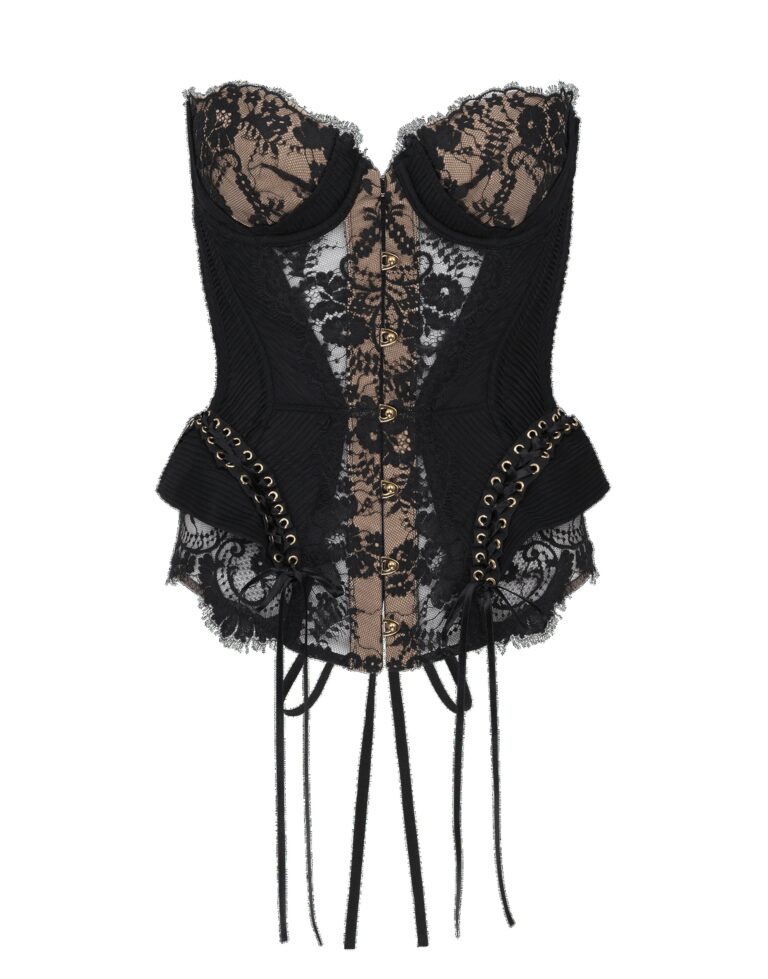
    Black | For the evening that deserves it. Some garments are worn. Others are inhabited. The Sophie Lace Bodysuit belongs to the second category — the kind of piece you put on slowly, that changes the register of the evening the moment it is fastened. Black floral lace over sheer mesh, underwired for shape, lace-up…

  • Sydney Swimsuit – Pour Moi

    Pour Moi Sydney Double Strap Underwired Swimsuit The one you wear when you mean it. There is a particular kind of confidence that has nothing to do with exposure. It is the confidence of a woman who has chosen carefully, who knows exactly what she is wearing and why, and feels it with every movement….

Leave a Reply

Your email address will not be published. Required fields are marked *