The Bed of Procrustes – Nassim Nicholas Taleb

Penguin | Aphorisms and Personal Observations

There is a particular pleasure in a book that does not ask you to start at the beginning. Nassim Nicholas Taleb’s The Bed of Procrustes is that kind of book: a collection of aphorisms that can be opened anywhere, read for five minutes or fifty, and set down without guilt. It is, in the best sense, a book for the unhurried.

The title comes from Greek mythology. Procrustes was the innkeeper who stretched or cut his guests to fit his bed — a metaphor Taleb uses for the human tendency to force reality into our existing frameworks rather than adjusting our frameworks to reality. We cut the world to fit our models. We trim the evidence to fit our theories. The bed, Taleb suggests, is everywhere.

What follows is a series of observations — sharp, sometimes abrasive, often funny — on knowledge, fragility, modernity, and the particular foolishness of people who confuse education with intelligence. Taleb has little patience for what he calls the “Soviet-Harvard” style of thinking: top-down, theoretical, disconnected from the grain of real experience. His aphorisms are the opposite, bottom-up, earned, occasionally wounding.

Some examples land like small explosions. Others require sitting with. A few will annoy you. This is, one suspects, entirely intentional.

The Bed of Procrustes is not Taleb’s most famous book, nor his most ambitious. But it may be his most purely pleasurable, a cabinet of observations to return to, to argue with, to copy into notebooks. Read it slowly. Read it twice. It rewards the kind of attention that most books never receive.
Similar Posts

  • The Case for Reading Slowly

    What neuroscience, philosophy and a quieter life can teach us about the most important thing we have stopped doing properly. We have not stopped reading. If anything, we read more than any generation in human history: feeds, newsletters, threads, captions, notifications, summaries of things we intend to read later. We are drowning in text. What…

  • The Importance of Living – Lin Yutang

    William Morrow | Philosophy, Essays There are books that arrive at exactly the right moment, and books that arrive long before the culture is ready for them. Lin Yutang’s The Importance of Living, published in 1937, belongs firmly to the second category. A Chinese philosopher writing in English, addressing a Western world he found baffling…

  • How to Listen to Jazz – Ted Gioia

    Basic Books | Music, Culture There is a particular kind of book that does not simply describe its subject but transforms your relationship to it. Ted Gioia’s How to Listen to Jazz is that kind of book. Read it on a Tuesday evening and by Wednesday morning you will hear music differently… more attentively, more…

  • Sydney Swimsuit – Pour Moi

    Pour Moi Sydney Double Strap Underwired Swimsuit The one you wear when you mean it. There is a particular kind of confidence that has nothing to do with exposure. It is the confidence of a woman who has chosen carefully, who knows exactly what she is wearing and why, and feels it with every movement….

  • The Bloody Chamber – Angela Carter

    Vintage | Short Stories There is a moment in the title story of Angela Carter’s The Bloody Chamber when the narrator, a young bride alone in her husband’s castle, opens a forbidden door and finds something that will change her forever. It is a moment of dread and recognition in equal measure, the feeling that…

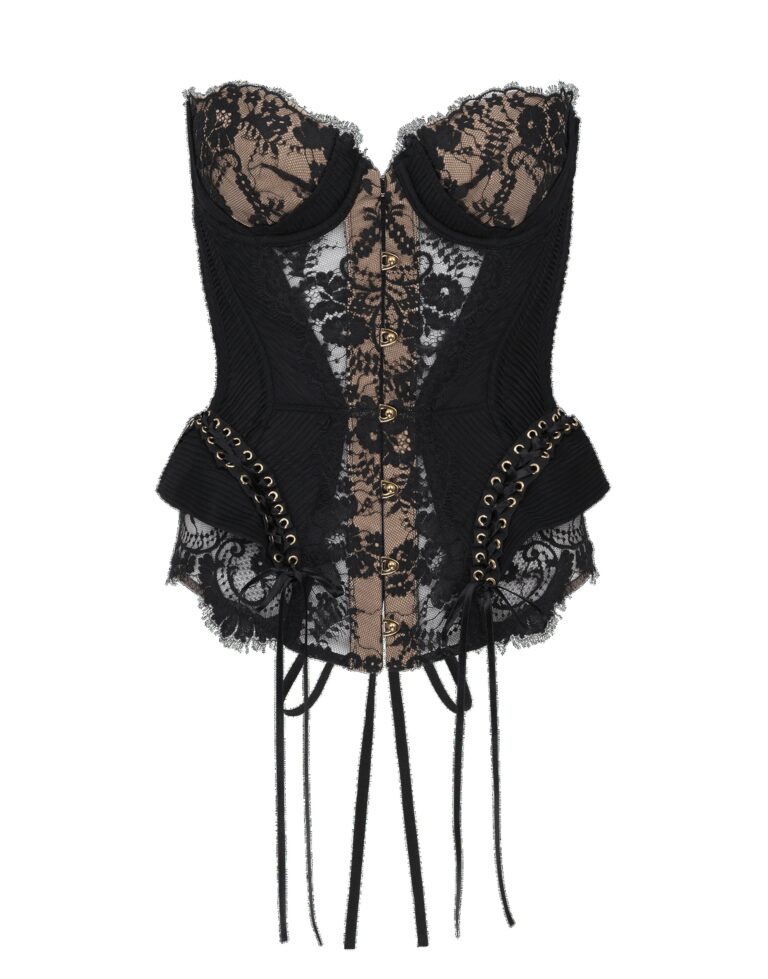
  • Raphaella Corset – Agent Provocateur

    Black | The one that changes the evening. There are garments that flatter. And then there are garments that transform. The Raphaella Corset belongs to the second category — the kind of piece that changes not just how you look but how you move, how you hold yourself, how the evening feels from the inside….

Leave a Reply

Your email address will not be published. Required fields are marked *