A Brief History of Lingerie
From whalebone to liberation: how what we wear beneath has always said more than what we wear on top.
There is no garment more revealing than the one nobody is supposed to see. Lingerie has always told us something true about the society that produced it: about power, about bodies, about who gets to decide what a woman should feel like underneath.
This is that story.

The Ancient World: Cloth and Practicality
The history begins, as most things do, with practicality. Egyptian women wrapped linen loincloths beneath their tunics. Greek women bound their chests with strips of cloth called the apodesmos. Roman women used the strophium — a simple band, wound and tied. These were not garments of seduction. They were garments of function: protection from rough fabric, support during movement, a layer between the body and the world.
And yet even here, in the earliest examples, we see something more. Minoan imagery shows structured bodices lifting and exposing the bust — not for comfort, but for display, tied to religious ceremony and cultural identity. The intimate garment has never been purely private. From the very beginning, it has carried meaning.
The Corset Centuries: Control as Virtue
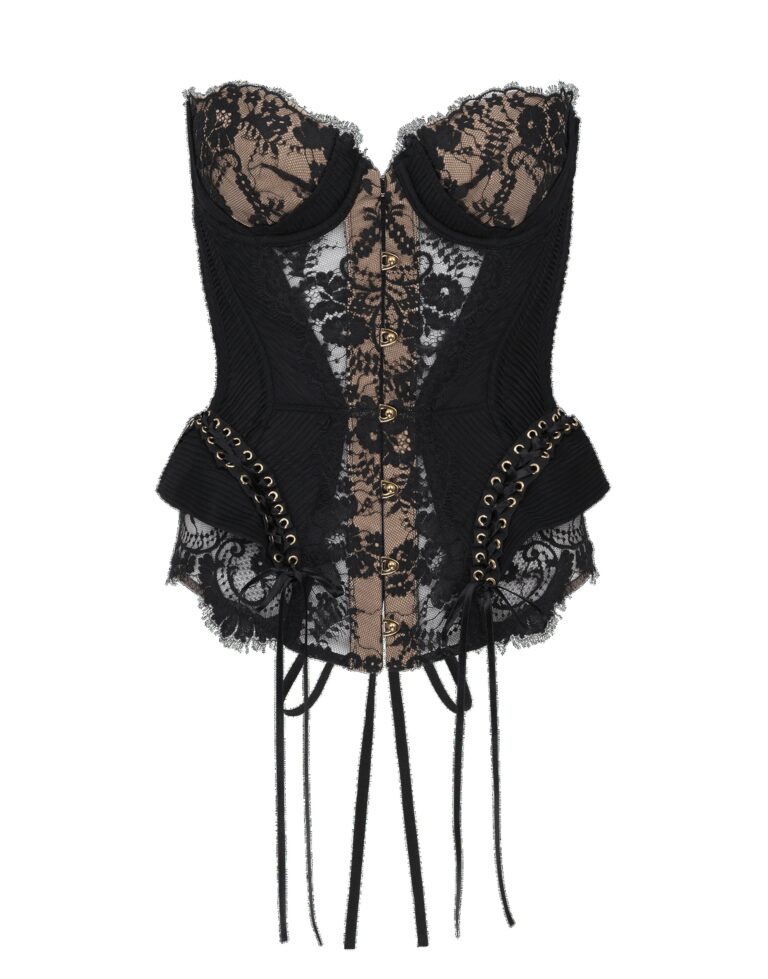
The corset arrives in Renaissance Europe and does not leave quietly. Stiffened with whalebone, wood, and metal, it flattens the torso, lifts the bust, and creates a rigid, conical silhouette that leaves little room for the body to simply exist as it is. Catherine de’ Medici is often credited with bringing the corset to the French court in the mid-1500s, transforming it from a structural garment into a symbol of aristocratic refinement.
For the next three centuries, the corset dominates. It grows more elaborate — embroidered, laced, decorated — and more culturally loaded. A tightly laced body signals moral virtue. Posture and control reflect social standing. To be a woman of rank is to be a woman whose body has been disciplined into a particular shape.
What is remarkable, looking back, is how thoroughly this logic was internalised. The corset was not simply imposed from outside. Women wore it, adapted it, made it their own — even as it shaped their lungs, their ribs, their movement. The intimate garment as ideology: this is the lesson of the corset centuries.
The Liberation of the Bra
The 20th century begins with a slow unravelling of all that boning. As fashion shifts toward more natural silhouettes and women begin to move differently — cycling, working, demanding different things of their bodies — the corset gradually loses its grip.
In 1914, Mary Phelps Jacob patents the first recognisably modern bra, constructed from two handkerchiefs and a ribbon. It is a small thing, and quietly revolutionary. The rigid structure falls away. The torso is freed.
The 1920s complete the transformation. The flapper era values a straight, boyish figure — bandeau bras and step-in chemises replace heavy foundations. Lingerie follows women’s broader social freedoms: shorter hemlines, dancing, new kinds of work, new kinds of life. The garment beneath becomes lighter as the life above it expands.
By the 1930s, lingerie has become technical. Warner’s introduces cup sizing. Adjustable straps, hooks and elastic fabrics make mass-produced bras that fit different bodies possible. For the first time, individual fit begins to matter as much as collective ideal.
The Glamour Years
The 1940s and 50s bring the bullet bra — conical, pointed, improbable — amplified by Hollywood and pin-up culture into an icon of mid-century femininity. Marilyn Monroe. Longline bras. Waspies and girdles. The hourglass silhouette returns, softer than its Victorian predecessor but no less insistent.
Lingerie in these decades carries a distinct erotic charge that earlier centuries would have found extraordinary. It is functional and aspirational at once — a tool of allure as much as support. The private garment has become a fantasy.
Liberation and Its Discontents
The 1960s complicate everything. The women’s liberation movement challenges restrictive beauty standards, and the idea of bra-burning — more myth than mass practice, but powerful as symbol — reframes lingerie as a site of political contest. Is it oppression or pleasure? Constraint or choice?
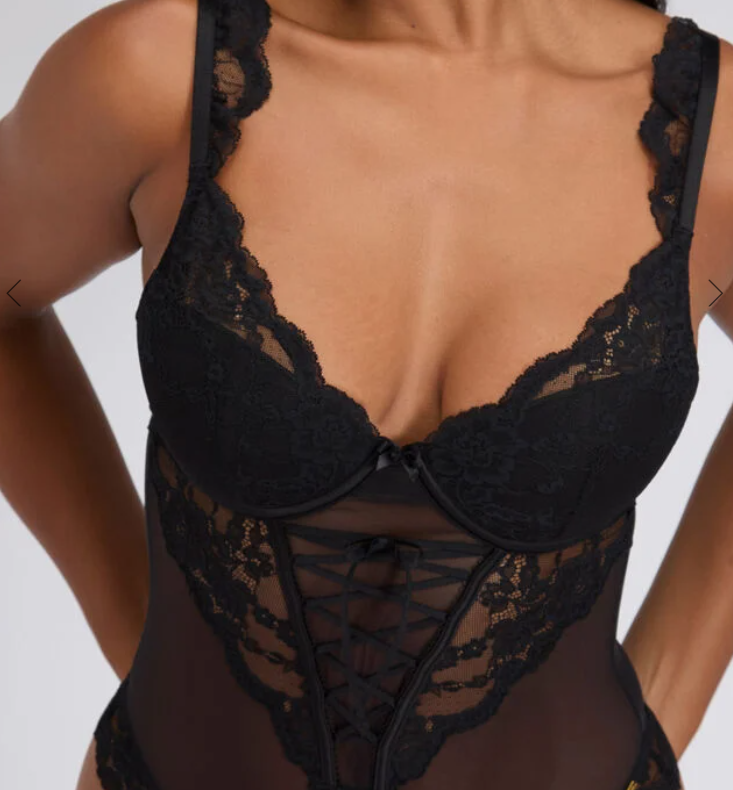
This tension never fully resolves. The 1970s lean toward natural shapes and simpler fabrics. The 1980s swing back toward lace bodysuits, bustiers, and overtly glamorous sets, this time framed as empowering rather than restrictive. Jean Paul Gaultier sends corset-inspired pieces down the runway. Madonna wears the cone bra on stage. Underwear becomes outerwear, and the private garment is fully, finally, public.
The 1990s give us the Wonderbra’s “Hello Boys” campaign and Victoria’s Secret Angels — lingerie as prime-time spectacle, sexuality made into entertainment, desire turned into a brand.
Where We Are Now
The 2020s are quieter, and more interesting for it. The dominant trend is comfort — wireless bras, bralettes, sustainable fabrics, adaptive designs for bodies that don’t fit the old categories. The lingerie market has expanded to include gender-neutral cuts, pieces designed for trans and non-binary bodies, adaptive garments for disabled wearers.
The ideal, if there is one now, is self-expression rather than conformity. The garment beneath is no longer about discipline or fantasy imposed from outside. It is, at its best, simply about how you want to feel.
Which brings us back to where this history always returns: the intimate garment has never been merely intimate. It carries the weight of every era that produced it — its anxieties, its freedoms, its ideas about who a body is supposed to be.
Wear it accordingly.